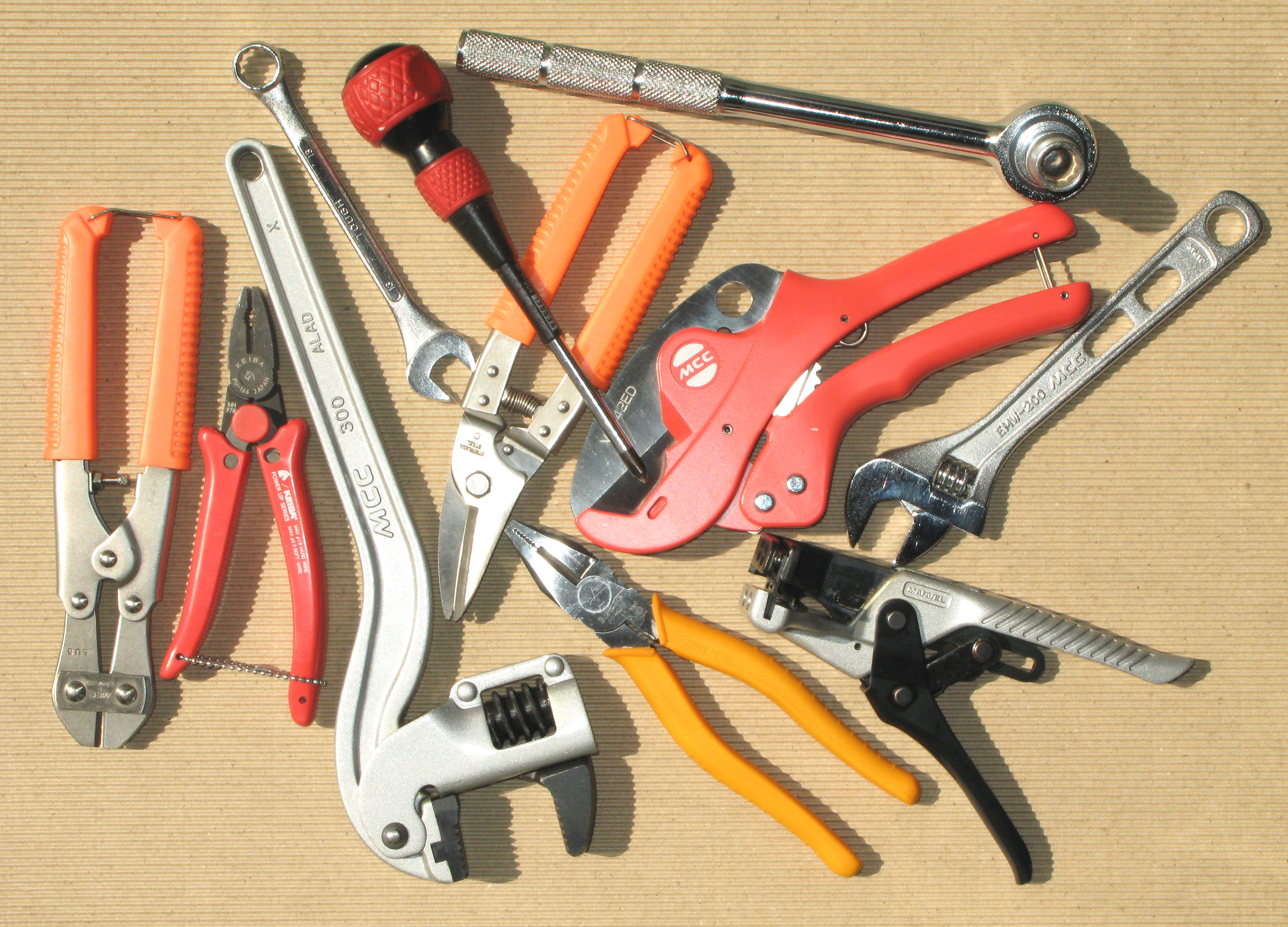
A well-selected set of hand and power tools handles the majority of carpentry and repair tasks around a Canadian home. Rather than accumulating every available item, focusing on versatility and quality within each category produces better results over time. The tools listed here are grouped by function.
Measuring and Layout
Accurate measurement is the foundation of every carpentry task. Errors made here propagate through every subsequent step.

Tape Measure
A 5-metre or 8-metre retractable tape measure in metric covers most interior tasks. Look for a tape with both metric and imperial markings — Canadian building materials are often specified in imperial dimensions even though the country uses metric officially. A wider blade (25 mm or more) holds its shape at longer extensions without drooping.
Combination Square
A 300 mm combination square checks for 90° and 45° angles, measures depth, and marks consistent distances from an edge. It is more useful than a standard try square for most repair work because the head slides along the blade for variable reference distances.
Spirit Level
A 600 mm aluminium spirit level handles shelves, door frames, and cabinet installations. For longer runs, a 1200 mm level is preferable. Digital levels are available but a standard bubble level is reliable and requires no batteries.
Stud Finder
Locating framing members before drilling or cutting is essential. Magnetic stud finders detect drywall screws already in place; electronic models detect density changes in the wall. In older Canadian homes with irregular stud spacing or plaster walls, a combination of an electronic finder and a finish nail to confirm is a reliable method.

Cutting Tools
Choosing the right saw for each material reduces effort and produces cleaner cuts.
Hand Saw
An 8-point crosscut hand saw cuts through dimensional lumber accurately without requiring power. For fine finish work on trim, a 10 or 12-point saw produces a smoother cut. Keep the blade clean and lightly oiled; dull teeth tear rather than cut cleanly.
Circular Saw
A corded or cordless circular saw handles sheet goods and dimensional lumber efficiently. A 185 mm (7-1/4 inch) blade is the most versatile size. When cutting drywall with a circular saw, use a carbide-tipped blade designed for masonry or use a drywall saw instead — gypsum dulls standard wood blades quickly.

Utility Knife
A heavy-duty utility knife with replaceable blades scores drywall, cuts insulation, and trims caulk. Replace blades frequently — a dull blade requires more force and produces less controlled cuts.
Jigsaw
For curved cuts or cutouts (outlet boxes, pipe penetrations), a jigsaw is more controllable than a circular saw. Blade selection matters: use fine-tooth blades for plywood and engineered panels; coarser blades for rough framing lumber.
Fastening Tools
Claw Hammer
A 20-oz steel claw hammer drives and pulls common and finish nails. For finish trim, a 16-oz hammer provides more control with less risk of surface damage. The curved claw pulls nails; the rip claw (straight claw) is better for prying apart framing.

Cordless Drill / Driver
A 18V or 20V cordless drill handles drilling and screw driving. Variable speed and a clutch setting prevent overdriving screws into drywall. Keep two batteries charged so work is not interrupted. A set of twist bits (metric, 3–12 mm) and a selection of screwdriver bits (PH1, PH2, PZ2, Robertson #1 and #2) covers most fastening situations.
Robertson (square drive) screws are the standard in Canada and are noticeably easier to drive than Phillips-head screws. Most drywall screws, structural screws, and deck screws sold at Canadian hardware retailers use Robertson heads.
Screwdrivers
Manual screwdrivers remain useful for tight spaces, delicate fasteners, and situations where a drill would cause damage. A set with interchangeable bits — including Robertson, Phillips, and flathead — is more compact than individual screwdrivers for each size.
Finishing Tools
Sanding Block and Sandpaper
A sanding block keeps sandpaper flat against the surface, which prevents the uneven results that come from sanding with fingers alone. Stock grits from 80 (coarse, for shaping) through 120 and 180 (medium, between coats) to 220 (fine, final surface preparation).
Putty Knife
A flexible-blade putty knife (4–6 inch) applies and feathers joint compound and wood filler. A wider knife (10 or 12 inch) is useful for second and third coats on larger patches. Clean the blade after every use — dried compound on the blade causes drag marks.
Tool Storage and Maintenance
Canadian winters create storage challenges for tools with rubber grips and plastic housings — extreme cold makes some materials brittle. Avoid storing power tools in unheated garages or sheds where temperatures drop well below freezing for extended periods. Lithium-ion batteries, in particular, lose capacity in cold storage and should be kept at room temperature.
| Tool | Basic Maintenance | Frequency |
|---|---|---|
| Tape measure | Wipe blade clean, check lock button | After each use |
| Hand saw | Wipe blade, store in sleeve | After each use |
| Circular saw | Remove dust from vents, check blade | After each project |
| Drill/driver | Check chuck, clean vents | After each project |
| Chisels and knives | Hone or replace blade when dull | As needed |
Where to Purchase
Major hardware retailers operating across Canada — including Home Depot Canada, Rona, Home Hardware, and Kent Building Supplies in Atlantic Canada — stock all items listed in this guide. Prices vary significantly between entry-level and professional grades; mid-range tools from established brands typically offer the best balance of durability and cost for homeowner use.